The Odyssey is an Epitaph for American Empire
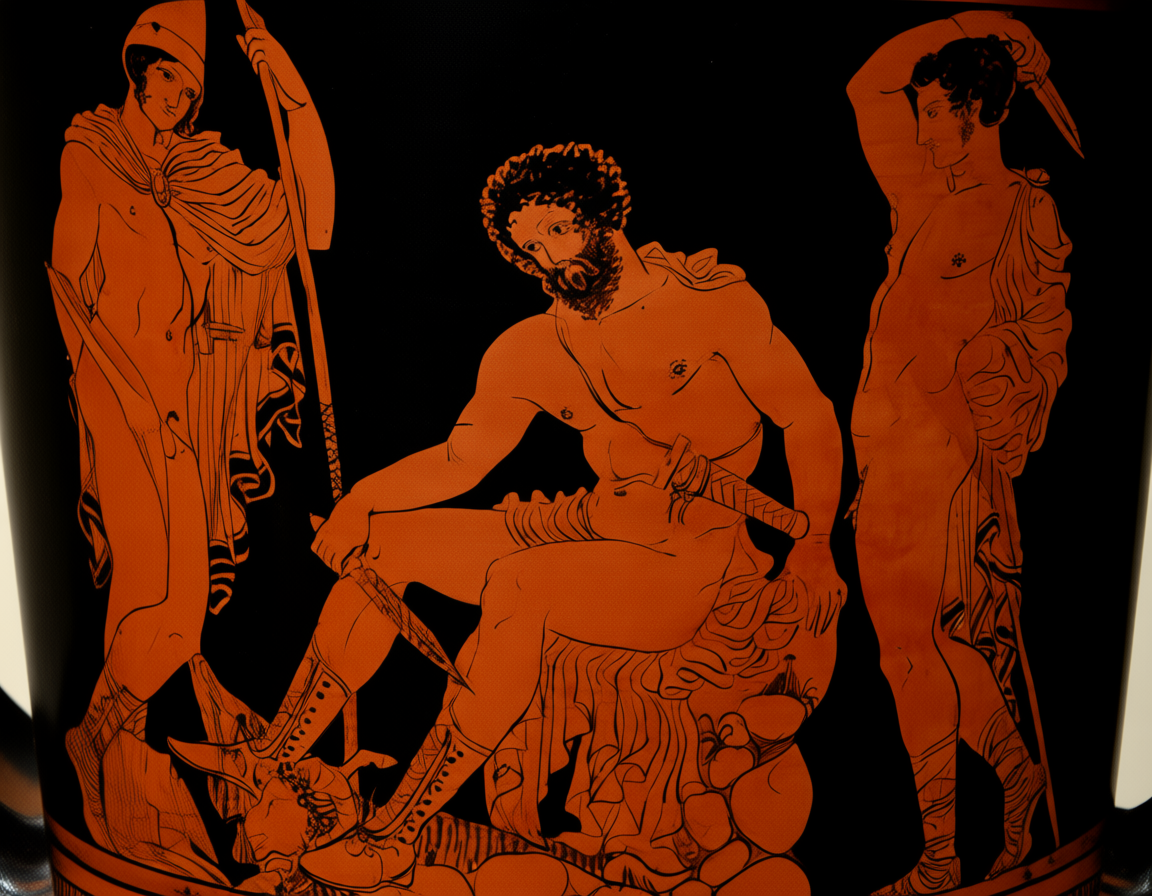
I can’t claim to have read The Odyssey in full; I only read a Reader’s Digest novella in a high school English class. Still, that brief assignment left one overwhelming impression: Odysseus was a prick. He was a scoundrel and a rogue, not a hero by today’s standards. He wasn’t magnanimous or kind. He wasn’t loyal or fair. He was clever, though, and tough. He survived great ordeals that felled demigods and kings. His adventures were exciting, even if he himself wasn’t very inspiring.
Matt Damon is not a scoundrel or a rogue. Damon is a fine actor, but he’s primarily a movie star. He occupies that same lane as Tom Hanks—called upon to instantly win the audience’s trust. He’s not quick with quips. Damon played that archetypal mid-century American villain, Tom Ripley, not as a master tactician but as someone constantly surprised at how far one could go on simple lies, especially in a place where people are quick to give you the benefit of the doubt.
By casting Damon, Nolan makes clear his intentions for Odysseus in this film. Don’t look here for historical accuracy or even strict adherence to the source material. The production paid top dollar so that modern audiences would sympathize with this Odysseus from the very first glimpse of him. We are meant to accept him as one of our own and share his sorrows.
The Odyssey closes a loop in Christopher Nolan’s filmography that began with the Batman trilogy. Nolan used The Dark Knight to interrogate the U.S.’s War on Terror. Now, decades later, he returns to that theme after U.S. forces have concluded their military operations in Iraq and fully withdrawn from Afghanistan. In Nolan’s telling, this Odyssey is the story of a war won so dishonorably that it destroyed the victors: a war waged under false pretenses—ostensibly to restore honor, but openly pursued to control trade routes and regional resources.
One of the first criticisms after the trailer and poster dropped for The Odyssey was: “That’s not Agamemnon—that’s Batman!” I can’t pinpoint who first said it, but countless others echoed the comparison. But after watching the film? Yes. Agamemnon is Batman.
In The Dark Knight, Nolan had Batman, the symbol of American might, commit the most egregious sins of the George W. Bush administration during the War on Terror. He tortured prisoners, covered up his party’s crimes, authorized extraordinary renditions, wiretapped unsuspecting citizens without warrants, and showed little hesitation toward violence. I’m not trying to guess Nolan’s politics; like most things about him, they play out better on screen. Still, it’s notable that every rule of engagement Batman broke ultimately proved useless. In the end, he didn’t prevent the Joker from launching his plan. The Joker’s failure stemmed from a misreading of human nature, not from the Dark Knight’s tenacity.
The Batman trilogy was released during the height of U.S. military involvement in Iraq. In The Odyssey, Nolan now examines the aftermath of that broader War on Terror: the cost to society when every rule of honorable combat is broken in pursuit of victory. Alongside snippets of dialogue where Odysseus sets Penelope straight about why Agamemnon is really invading Troy, Nolan weaves in numerous references to the Sea Peoples.
The Sea Peoples were real, but that’s where historical consensus ends. Were they casualties of civilizational or ecological collapse, invading conquerors, or mere bystanders? In this Odyssey, they’re roving marauders who strike fear into the hearts of Greek kings still reeling from the Trojan War. One of the film’s major revelations is that the soldiers returning from Troy are themselves the Sea Peoples, plundering as they make their way home across the Aegean Sea. Veterans returned home as a plague upon their own homelands.
On January 6, 2021, the United States Capitol was sacked by supporters of Donald Trump. Analysis found that 20% of the participants were military veterans. The threat posed by armed veterans was so acute that then-Secretary Lloyd Austin devoted significant resources to preventing their radicalization.
In 2011, Barack Obama withdrew U.S. forces from Iraq and declared the mission finished. In The Dark Knight Rises, Nolan imagined a Batman who had finally sated his thirst for vengeance: destroying the symbol in a blaze of glory but leaving behind a Bruce Wayne capable of finding peace, even as the man himself became little more than a ghost haunting the world.
Reality soon intruded: in September 2014, Obama was forced to redeploy troops to prevent ISIL from capturing the entire country.
I don’t think Nolan’s Odyssey is commentary on Trump, particularly his second term. Filming schedules make that highly unlikely. Instead, I’d guess the spark for this telling was the United States’ final withdrawal from Afghanistan—a meek, bloody end to a horrible enterprise. Perhaps U.S. forces will never leave Iraq—at least not for decades—but the war has already come home. It’s Western society teetering on the brink of collapse now; all its demons have returned.
The Odyssey ends with Odysseus choosing exile as penance to honor the lives of his crew. He leaves just as the Greek world he fought for collapses around him. Unlike The Dark Knight Rises, Odysseus’s departure is unambiguous. He is gone, and we cannot follow. There is no promise that a symbol can endure or a new one to spring up in his absence. He leaves his kingdom of Ithaca to his son, Telemachus, who the film has already shown lacks the resilience to survive or step into his father’s shadow. Odysseus chose his atonement, but there are no illusions that it will be enough to save his world.